
This article has been reviewed and updated with current information, new examples, and the latest academic requirements for 2026
If you want to unleash your story, then learn how to write a personal narrative. First, start with a significant experience that has shaped you. Use vivid descriptions and sensory details to bring your story to life. Explore your emotions and reflections to add depth. Write in an authentic voice and use dialogue to make it more engaging.
If you are a student, then for your class assignment or college application, you might be asked to submit a personal narrative. In general, a personal narrative is a type of writing that allows you to focus on a specific event from your real life and experiences. Typically, a personal narrative is all about yourself, and hence it is not mandatory to structure the entire story in the way that you like. However, the story that you narrate should be in a proper format, and it should help you showcase your creativity and storytelling skills. In case you are unsure of how to write a personal narrative, continue reading this blog post. Here, we have shared the steps for writing a personal narrative more creatively and impressively.
Before moving to the tips and guidelines, first, let us see the definition of the personal narrative.
How to Write a Personal Narrative
A personal narrative is a true story from your own life, told in a way that has meaning beyond just the events themselves. It is not a diary entry. It is not a list of things that happened. It is a shaped, deliberate piece of writing that takes one experience and uses it to illuminate something true about being human.
The best personal narratives make the reader feel like they are inside the experience. They use specific details, honest emotion, and a moment of insight or change that gives the story its meaning.
What Makes a Personal Narrative Different from Other Essays
Personal Narrative vs Standard Essay
| Feature | Personal Narrative | Standard Essay |
|---|---|---|
| Person | First person (I) | Usually third person |
| Structure | Story-based (has a plot) | Argument-based (has a thesis) |
| Tone | Personal, reflective, specific | Formal and analytical |
| Evidence | Sensory detail from memory | Sources and data |
| Goal | Share an experience and its meaning | Argue a position |
The Core Elements of a Good Personal Narrative
1. A Specific Moment or Scene — Not a Summary
“The summer I learned to swim” is a topic. “The moment I let go of the wall and felt the water hold me up” is a scene. The best personal narratives are built around specific, vivid moments — not summaries of long periods of time.
2. Sensory Detail
The reader should be able to see, hear, smell, and feel what you experienced. Detail is not decoration — it is what makes the story real and specific to you, rather than to anyone.
3. Honest Emotion
Not the emotion you think you should have felt, or the emotion that makes you look good — the emotion you actually felt, including the uncomfortable or contradictory ones.
4. A Clear Narrative Arc
Even a short personal narrative needs a beginning (context and setup), a middle (the event, complication, or challenge), and an end (resolution and reflection).
5. A Moment of Insight or Change
The best personal narratives do not just describe what happened — they show how it changed the writer. This is the “so what” of the story. Without it, the narrative is just a sequence of events.
Step-by-Step Guide
Step 1 — Choose the Right Moment
Do not choose the biggest or most dramatic thing that has ever happened to you. The most compelling personal narratives are often about small, quiet moments that carry large meaning.
Ask yourself:
- What moment from my life do I keep thinking about even though it was years ago?
- When was I most surprised by someone — or by myself?
- When did I change my mind about something important?
- What moment taught me something I could not have learned any other way?
Then ask: Can I describe this in detail? Can I remember what was said, what it looked like, how it felt in my body?
If yes — that is your story.
Step 2 — Start in the Middle of the Action
One of the most common mistakes in personal narratives is starting too early. Do not begin with background or context. Begin at the moment that matters.
Weak Opening:
When I was fourteen, I used to go fishing with my grandfather every summer. We had been doing this for as long as I could remember. He was a quiet man who did not say much, but…
Strong Opening:
The first time my grandfather cried in front of me, we were knee-deep in the river and he had just lost a fish.
The strong opening drops the reader directly into a specific moment. It creates immediate questions: Why did he cry? What happened? It earns the context that follows.
Step 3 — Use the Show-Don’t-Tell Principle
Telling is when you state an emotion or idea directly.
Showing is when you create that emotion through specific detail and action.
Telling : I was very nervous before my presentation.
Showing : My hands were cold. I kept reading the first sentence of my notes over and over, the words blurring slightly, not because I did not know them but because I was not really reading — I was just doing something with my eyes so I did not have to look at the room.
The second version makes you feel the nervousness rather than simply being told it exists.
Step 4 — Use Dialogue Carefully
Dialogue makes a narrative feel alive. But you do not need to reconstruct every conversation. Use it selectively — for the exchanges that reveal character or carry emotional weight.
When Dialogue Works Well:
She looked at me for a moment and said, “You know this is not your fault, right?” I did not know what to say. I had not known until that moment that I had been waiting for someone to say it.
When Dialogue Becomes Clutter:
“Hello,” he said. “Hello,” I said back. “How are you?” “Fine, thanks.” — This is just filling space.
Rule of thumb: if the dialogue does not reveal character or change the emotional temperature of the scene, cut it or paraphrase it.
Step 5 — Slow Down for the Most Important Moments
Time in a narrative is not the same as real time. You can spend five sentences on a single second if that second matters. You can summarise three hours in one sentence if those hours are not essential.
The most important moments in your story should be written in slow motion — with the most detail, the most sensory language, the most internal reflection.
Step 6 — End with Meaning, Not with “and that is what I learned”
The ending is where most personal narratives become weak. Students feel obliged to state their lesson explicitly.
Weak Ending : This experience taught me that family is the most important thing. I will never forget what happened that day and it made me a better person.
Strong Ending : He caught another fish twenty minutes later and he did not cry. He never mentioned the first one. I have thought about that silence many times since — the way he let the moment pass and moved on, as if loss were just part of the afternoon. I am still learning how to do that.
The strong ending delivers the insight without stating it baldly. It trusts the reader to understand.
Complete Annotated Personal Narrative Example
Title: Enough
The first time my grandfather cried in front of me, we were knee-deep in the river and he had just lost a fish. [Strong opening — drops directly into a scene, creates an immediate question]
It was early morning, July, and the water was cold enough to feel through the waders. I was thirteen. He was sixty-eight and had been fishing this river since before my father was born. The line had gone taut, he had worked it carefully for nearly four minutes — I had been watching his hands — and then it was slack. The fish was gone. [Specific sensory detail grounds the reader — cold water, the waders, the watch on his hands. Four minutes is specific in a way that “a while” is not.]
He did not say anything. He reeled in the empty line and held the rod loosely in one hand, and then I noticed his jaw was set in a way I recognised from the two times I had seen him properly angry, except this was not anger. His eyes were wet. [Honest observation without over-explaining — “I noticed,” “I recognised.” The narrator is watching carefully.]
I did not know what to do with that. He had always seemed to me like a person who existed outside of normal emotional weather — steady, dry, reliable as the table in his kitchen. I looked away. I pretended to check my own line. [Honest reaction — looking away, pretending — this is specific to the narrator, not a generic response.]
After a minute he said, “That happens.” [Short, understated dialogue that carries enormous weight.]
I said, “Yeah.”
We fished for another two hours. He caught two more. I caught none and he did not comment on that either. On the drive home, the windows down, the car smelling of mud and cold air, he told me about the first fish he ever caught on that river — he was nine, his own grandfather was with him, and the fish was enormous and he had no idea what he was doing and somehow it worked out. He laughed telling it. [The car scene returns warmth and continuity — the story has turned a corner.]
I do not know what he was really crying about. A lost fish, maybe. Or his age. Or the fact that he still cared enough about a lost fish to cry, which might have surprised him too. [The narrator does not over-explain. The uncertainty is honest and specific.]
He caught another fish twenty minutes later and he did not cry. He never mentioned the first one. I have thought about that silence many times since — the way he let the moment pass and moved on, as if loss were just part of the afternoon. I am still learning how to do that. [The ending delivers the insight without stating it as a lesson. “I am still learning how to do that” — present tense, ongoing — is more honest than “this taught me.”]
Essential Elements of a Well-Structured Personal Narrative
As a personal narrative involves a sequence of events, it is necessary to structure the content neatly and manage the flow of ideas logically. Mainly, to create a detailed and well-structured narrative, it is essential to explain each component in specific. Here, let us have a look at the standard personal narrative format that you need to follow to prepare a comprehensive essay.
Introduction
It is the opening part of an essay. This section will help your readers decide whether to read your narrative essay writing service or not. Even if you write about a thrilling and chilling experience, a bad introduction might prevent the readers from reading. Therefore, write an introduction that immediately piques the interest of the reader.
Always trigger the emotions of the readers at the start of the introduction. Let them know something they had proactively experienced. You could give a sympathetic touch by causing the readers to envision how they would feel, assuming they were in your place.
Plot
A plot defines the scene from the start to the end of your story. Usually, an excellent plot will support a personal narrative’s entire format. Therefore, even if your story isn’t very interesting, readers will be intrigued by your perfect plot.
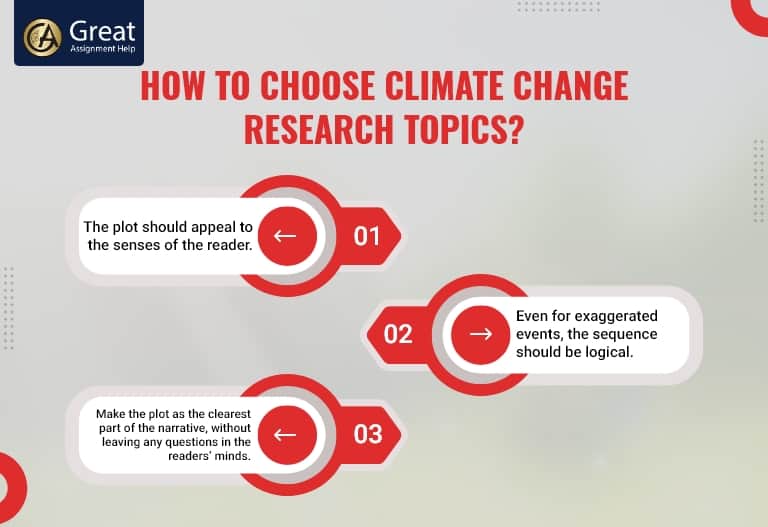
Especially when developing a story’s plot, remember these things.
- The plot should appeal to the senses of the reader.
- Even for exaggerated events, the sequence should be logical.
- Make the plot the clearest part of the narrative, without leaving any questions in the readers’ minds.
Before you create the plot, set the timeline of the events as past, present, and future. Moreover, to avoid confusion, assign dates specifically. This will help the readers relate to the entire timeline.
Also Read: A Very Old Man With Enormous Wings Summary
Characters
Characters are people who are a part of a story. Mostly, the characters will build an intimate effect to help readers connect with the story. Note that it is not necessary to have a hero and a villain in every story. Instead, you can make your story more attractive with the limited characters you have.
To maintain a balance in a story, introduce the characters one by one at the beginning or middle. Particularly, when introducing the characters in your story, share their specifications such as appearance, words, or any catchy action. Also, to assist the readers in easily remembering the character, you can bring in a new character and indirectly connect it with any portion of the plot’s timeline.
Setting
In personal narrative writing, the setting will give life to your story. Typically, a setting defines the timeline of each event in the story, i.e., when and where it happens. Mainly, the setting will make it easy for your readers to memorize your plot and help you understand your narrative easily. Always creatively define the setting so that it would be convenient for the readers to imagine the event.
Climax
While writing a personal narrative essay, to shape the resolution of your story, develop a climax. Note that your climax can finish a challenge, solve an issue, or answer a question. Mostly, a climax will provide a life lesson leading to personal growth. Consider the experience you have gained from your personal life event and come up with a climax that is satisfying to your readers. Before you reach the climax, add some suspense elements to your story to make it interesting.
Conclusion
It is the closing section of your narrative that will give your readers an in-depth comprehension of your experience. Remember, the conclusion should have an impact on your readers even after they have completed reading your story. So, always try to end the narrative with a thought-provoking message that is relevant to your story.
Follow the standard format shared above and draft an engaging personal narrative. In case you need more support, look for personal narrative examples online. By reading the samples available on the internet, you can get an idea of how to write a personal narrative essay topic in a well-structured manner.
Common Mistakes in Personal Narratives
Starting Too Early
Context is important, but earn it. Start in the moment and introduce background only when the story needs it.
Telling Emotions Instead of Showing Them
“I was devastated” is a claim. Show what devastation looks and feels like in your body and behaviour.
Trying to Be Impressive Instead of Being Honest
The most memorable personal narratives are honest about failure, confusion, and contradiction. Performing perfection is less interesting than telling the truth.
Making the Lesson Too Obvious
Trust your reader. If you have shown the experience well, they do not need you to explain what it meant in the final paragraph.
Using Vague, General Language
“It was an amazing experience” — what experience? Amazing how? Specificity is everything.
Conclusion
By now, you will have learned how to write a personal narrative for your assignment or college application. In case you still have doubts about writing an inspiring personal narrative as per the standard format, quickly connect with us. We have experts to offer you the best assignment help services. Particularly, with their assistance, you can create an engaging personal narrative or any other type of essay as per the guidelines.
FAQs
Q: What is the difference between a personal narrative and an autobiography?
An autobiography covers a whole life or large portion of it. A personal narrative focuses on a single experience or moment. Most personal narrative essays are 500–1,500 words and zoom in on one specific story.
Q: Can I change or combine details from real events?
For creative personal narratives, yes — some compression and composite detail is generally acceptable. For academic assignments that require a true account, ask your instructor what is permitted.
Q: Does a personal narrative need a thesis?
Not in the traditional sense. But it needs a central meaning or insight — something the story is building toward. That meaning does not have to be stated directly, but it must be felt by the reader in the ending.
Q: Can I write about a sad or dark topic?
Yes. Difficult experiences often produce the most powerful personal narratives — as long as the writing focuses on insight and growth rather than dwelling on pain for its own sake.
Q: How personal is too personal?
You should write about what feels true and significant. But you do not have to share anything you are not comfortable sharing. The test is not how private the material is — it is whether the story has something to say beyond the events themselves.