
This article has been reviewed and updated with current information, new examples, and the latest academic requirements for 2026
The greenhouse effect is a natural process that keeps Earth warm. Certain gases trap heat in the atmosphere and stop it from escaping into space. This warmth supports plant growth, stable climates, healthy ecosystems, and human life. Without it, Earth would be too cold for survival.
When you hear the word “greenhouse effect”, you might associate it with climate change, rising temperatures, and environmental risks. But the greenhouse effect itself is not a negative phenomenon. It is a natural process that makes the Earth habitable. If the greenhouse effect didn’t exist, the Earth would be a frozen planet, and it would be impossible for human beings, plants, and ecosystems to thrive on it.
Are you curious to learn about the advantages of the greenhouse effect and its role in sustainable living? Read this blog. Here, we have examined the greenhouse effect from various perspectives. Generally, learning about the benefits of the greenhouse effect will give you insight into how life exists and how too much greenhouse gas from human activities can lead to climate issues.
An Overview of the Greenhouse Effect
The greenhouse effect is a natural phenomenon that keeps the Earth warm. Some gases in the atmosphere, like carbon dioxide (CO₂), methane, water vapor, and nitrous oxide, trap the sun’s heat. This heat does not escape into space. Due to this “thermal blanket,” the average temperature on Earth stays around 15°C (59°F). If the greenhouse effect didn’t occur, the temperature would be -18°C (0°F), and it would be impossible to live on the Earth.
Students who wish to get a deeper understanding of chemical reactions or the physical processes involved can take science assignment help from experts online. They will provide detailed explanations with proper examples.
Why Greenhouse Gases are Crucial
Greenhouse gases play a very significant role in maintaining the balance of energy on Earth. These gases trap the heat energy from the Earth’s surface and reflect it, thus preventing the heat energy from escaping quickly into space. In the absence of greenhouse gases, the Earth’s temperature would fluctuate greatly from day to night, just like the Moon’s surface, which has no atmosphere.
A stable climate is a crucial factor for the existence of life on Earth. Plants will be able to grow and undergo photosynthesis, water will remain in a liquid state, and animals, including human beings, will be able to thrive in the environment. If you are researching how the climate functions, taking biology assignment help would be very helpful.
The Role of the Greenhouse Effect in Ecosystems
One of the most important advantages of the greenhouse effect is that it allows ecosystems to survive on Earth. Plants, which form the foundation of the food chain, require a stable and warm climate to grow and produce energy in the form of oxygen by the process of photosynthesis. Due to the greenhouse effect, ecosystems such as rainforests and tundras are able to survive.
For instance, the Amazon rainforest, which produces 20% of the world’s oxygen, requires moderate temperatures that are regulated by the presence of greenhouse gases. Similarly, Arctic foxes, reindeer, and birds require average temperatures to complete their life cycles.
Benefits of the Greenhouse Effect for Humans
There are many advantages for humans in terms of the warmth that is created by the greenhouse effect. Water remains in a liquid state, which is important for drinking, agriculture, sanitation, and industry. Moderate temperatures also lower extreme energy needs for heating. This, in turn, will make life easier and more sustainable for humans.
Some cities in temperate zones use this phenomenon to avoid the negative effects of freeze-thaw cycles that could damage roads, buildings, and food production. If you are doing projects on climate change or environmental issues, you can take online assignment help from subject professionals to find data and examples for your studies.
How the Greenhouse Effect Keeps the Climate Stable
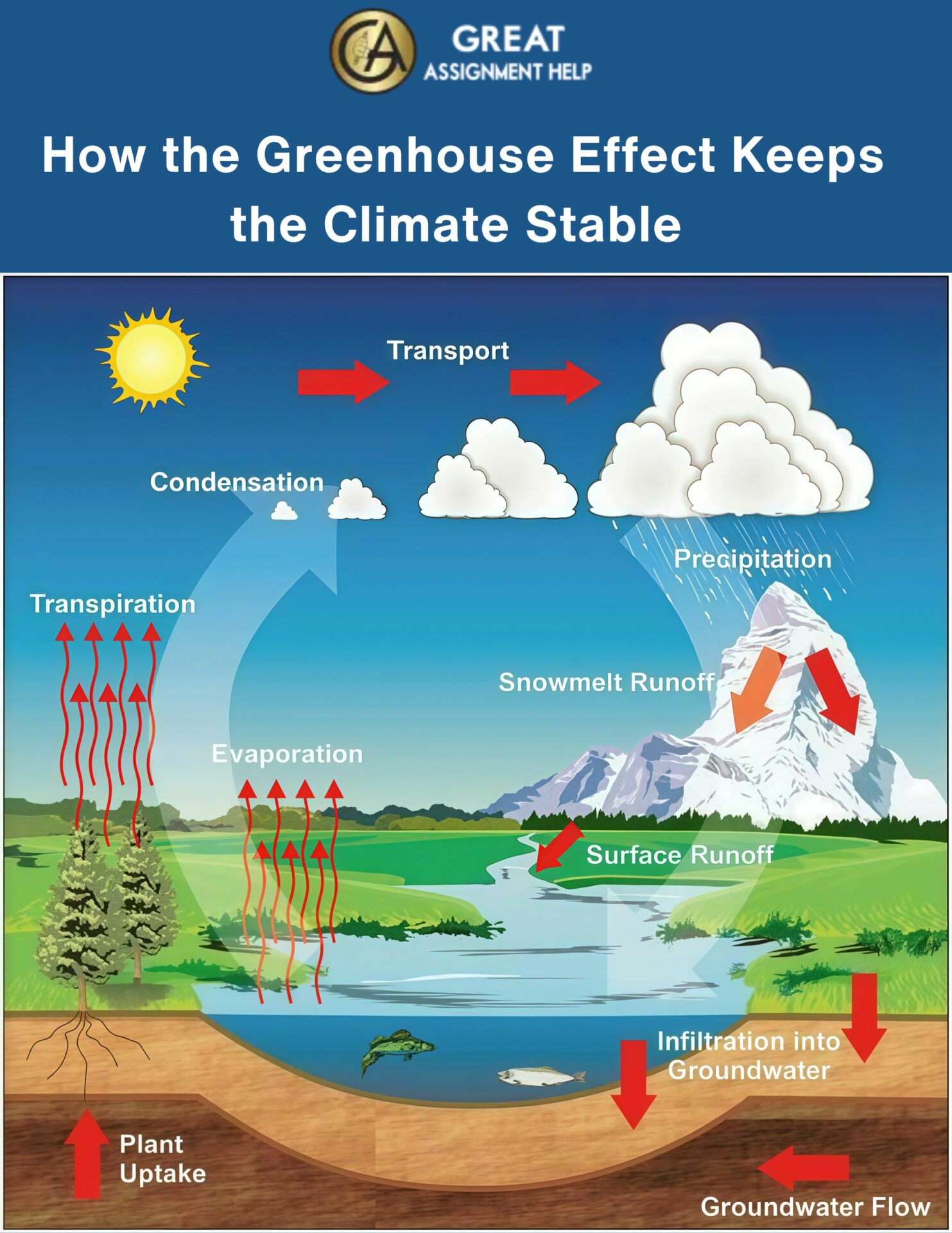
The greenhouse effect is what retains the heat on the Earth long enough to maintain the climate patterns on the continents. This helps to cut down on the need for additional heating or cooling in the regions, which helps to save energy and reduce carbon emissions.
In regions such as Scandinavia, where the winters are extremely cold and long, the greenhouse effect helps to prevent freezing, which makes life easier for the inhabitants.
Practical Applications of the Greenhouse Effect
The benefits of the greenhouse effect have several practical uses in science, environmental planning, and agriculture. Scientists and policymakers rely on knowledge about heat-trapping gases to inform decisions on sustainable energy, land use, and climate change adaptation.
Students conducting research can benefit from chemistry assignment help to structure their assignments and gather evidence on the impact of greenhouse gases on the environment and human systems.
Practical Insights from Climate Science Research
Studies on climate demonstrate that a balanced amount of greenhouse gases can promote plant growth. In greenhouses, it has been observed that the addition of a small amount of carbon dioxide can enhance plant growth. This is similar to the effect of greenhouse gases on Earth.
The above experiments indicate that a balanced amount of greenhouse gases can enhance crop production and ensure food security.
Top Advantages of the Greenhouse Effect
The greenhouse effect has many significant advantages that contribute to life on Earth and maintain the balance of the environment. Generally, the benefits of the greenhouse effect support humans, plants, animals, and the environment as a whole.
- Temperature remains constant, and this will make the planet suitable for human, animal, and plant life. No extreme temperatures exist.
- Crops grow in abundance when the climate is constant. The greenhouse effect helps farmers grow crops and harvest them effectively.
- Ecosystems remain balanced. This will make it possible for various animals and plants to coexist. Mainly, animals and plants survive because of no extreme changes in their environment.
- Less energy is used to heat and cool buildings. Primarily, the greenhouse effect will help people conserve energy and not strain the energy resources.
Greenhouse Effect and Agricultural Productivity
Many benefits for agriculture result from the moderate climate produced by greenhouse gases. Plants and crops will grow in a situation where the seasons remain predictable and the temperatures are not extreme.
For example, a stable climate enables areas such as the agricultural regions of India to support the growth of several crops in a year. This enhances food production and the economy of the region.
Urban Planning and Greenhouse Effect
The cities make the most of the stable climate to use energy in a more efficient manner and create green spaces. The smaller differences in temperature help reduce energy bills and enable more land to be allocated for parks and gardens.
Generally, urban planners make use of climate data to create sustainable cities that promote the health and well-being of the people living in the city.
Conclusion
The greenhouse effect is a crucial factor in maintaining a stable climate on Earth. It provides the necessary conditions for life, nature, agriculture, and human development. While human actions contribute to the increase in greenhouse gases and climate change, this phenomenon is necessary for life to occur on Earth. By understanding both the positive and negative aspects, you can learn to appreciate the greenhouse effect and look for ways to minimize its negative effects. If you wish to know more about the greenhouse effect, take online assignment help from the subject experts on our team. They will clarify all your doubts and guide you in meeting your academic needs.
FAQs
1. Why is the greenhouse effect important for survival on Earth?
The greenhouse effect helps to maintain the planet at a temperature that is favorable for the survival of life on Earth. Without the greenhouse effect, the Earth would be too cold for life to exist.
2. How does the greenhouse effect increase agricultural productivity?
The greenhouse effect helps to maintain a moderate climate that is ideal for plant growth. Generally, stable temperatures prevent damage to crops and plants and support regular growing seasons.
3. How do scientists study the greenhouse effect using satellites?
Scientists use satellites to monitor greenhouse gases, surface temperatures, and heat radiation from Earth. This data helps them study climate patterns and predict future changes.