
If you want to proofread an assignment, then take a break first after writing. Next, read the paper slowly, check for grammar, spelling, punctuation, and formatting errors, read aloud to catch awkward sentences, and use online proofreading tools to make it error-free.
Assignment writing is a challenging task that takes a lot of time and effort. Specifically, when it comes to preparing assignments, students need to concentrate on researching the topic, gathering information, and following the institution’s or professor’s guidelines. In addition, students must proofread the assignment to make it perfect. Proofreading is as important as writing and research, and skipping it can affect the grades. By proofreading, students can spot mistakes, improve their work, and submit a clean, polished assignment. If you are a student who is unsure how to proofread an assignment, then read this blog. Here, we have suggested expert tips to make an assignment error-free. Simply by following those tips, you can edit and proofread your academic paper effectively.
An Overview of Proofreading
Proofreading is the final step in making sure your writing is clean and ready to submit. After you finish writing and editing your assignment, you should proofread it. Generally, proofreading will help you catch the small errors that can affect the quality of your work. Moreover, it will make your content look professional and easy to understand.
Whenever you proofread your assignment, you should check for simple but important mistakes such as:
- Formatting problems like wrong spacing, uneven fonts, or inconsistent headings and numbering
- Spelling mistakes, such as incorrect or missing letters
- Grammar errors like wrong tenses or poorly structured sentences
- Punctuation mistakes, such as missing commas or incorrect use of apostrophes
- Typing errors made by accident
Proofreading vs. Editing: Know the Differences
Many students often confuse editing and proofreading. So, for better understanding, we have shared the differences between proofreading and editing here
- Editing improves the overall content, while proofreading takes care of small, surface-level mistakes.
- Editing works on the structure, clarity, and flow of the writing, while proofreading checks grammar, punctuation, and spelling.
- The editing stage comes first, but proofreading is the final step before assignment submission.
- Editing may require rewriting or reordering sentences, while proofreading simply fixes errors.
The Importance of Proofreading in Academic Writing
The following are the major reasons why proofreading is considered one of the important parts of assignment writing
Prevents Mistakes and Low Grades
If you are taking online classes and have limited chances to interact with your professors, then rushing to submit your assignment can lead to simple but costly mistakes. No one gets everything perfect on the first try, which is why proofreading is so important for you. Typically, proofreading will help you catch and fix errors. Also, it will make your final submission accurate. If you ever feel stuck, you can use Online Class Help from academic experts to enhance the overall quality of your work.
Provides Clear Perspectives on the Academic Paper
Usually, it will take days or even weeks to write a long essay or dissertation. So, it is possible for you to easily lose track of your work along the way. In such moments, proofreading will help you review your ideas, check the flow, and make sure everything is in the right order. Overall, it will polish your paper and provide clear perspectives.
Protects Efforts and Boosts Grades
Generally, to finish your assignment, you will need to put in a lot of effort, give up sleep, phone time, and entertainment. So, don’t let small mistakes or accidental plagiarism ruin it. Proofreading will help you correct grammar, improve clarity, fix punctuation, and avoid plagiarism. This, in turn, will make your work look neat and professional. Most importantly, a carefully proofread assignment will look formal and increase your chances of getting better grades.
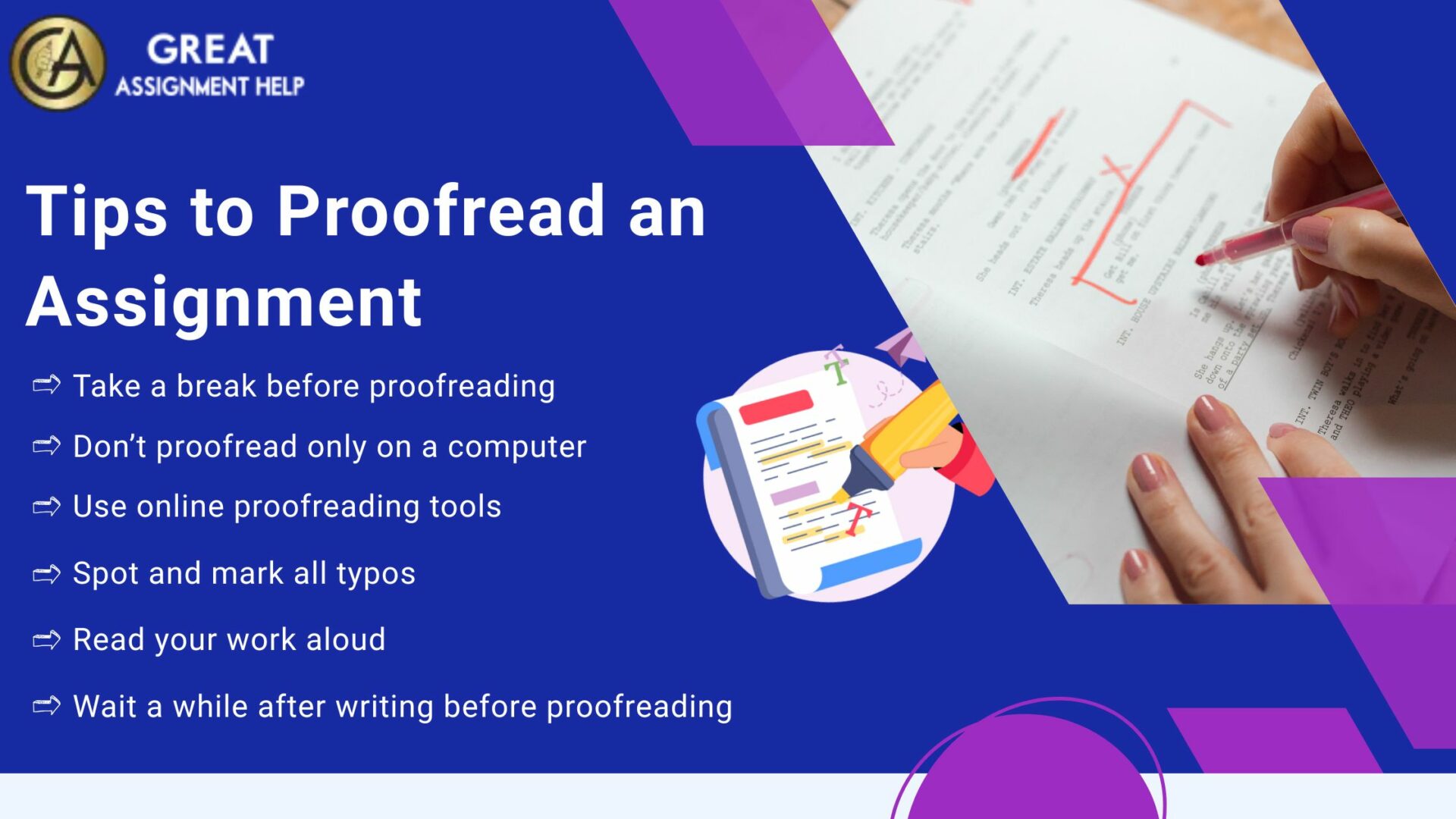
Tips to Proofread an Assignment
Proofreading is a simple yet often overlooked part of writing assignments. Many students skip it because they think it wastes time, but it actually makes a big difference. Proofreading will make your work look easy to read, while skipping it can leave avoidable errors. So, it is essential to learn how to proofread your assignment effectively.
In case you are clueless about how to enhance the overall quality of your paper, follow these assignment proofreading tips.
Take a break before proofreading
After you finish your assignment, your mind will likely be tired. If you try to proofread while feeling bored or distracted, you may miss mistakes. So, take ten to fifteen minutes to walk around, relax, grab a snack, or step outside. When you return with a fresh mind, you will spot errors more easily and accurately.
Don’t proofread only on a computer
You can easily type on a laptop, but proofreading on a screen can make you miss mistakes or lose focus. Hence, try printing your assignment and checking it on paper instead. Generally, seeing your work in a different format will help you spot errors more easily.
Use online proofreading tools
Several popular online tools, such as Grammarly, Ginger, QuillBot, Reverso, Slick Write, and Paper Rater, are available to help you find grammar mistakes, spelling errors, and awkward sentences. So, to effectively proofread your assignment, you can use them. Otherwise, you can also use professional assignment help services for accurate and error-free proofreading.
Spot and mark all typos
Take your time when reading your assignment. If you read too quickly or lose focus, you might miss mistakes. When you proofread, keep a pencil or highlighter handy and mark every error as you find it. This way, you can keep track of what needs fixing and make sure nothing is overlooked.
Read your work aloud
One of the simplest and best proofreading methods is reading the assignment aloud. When you read your work, you will get a chance to notice awkward sentences, missing words, and confusing points more quickly. Moreover, if someone else is around while you read, they can listen and give you helpful feedback. This will give you extra benefits. In case you need proper feedback from experts, instead of thinking, ‘Can I Pay Someone to do My Assignment?’ hire skilled proofreaders online. They will share valuable insights and help you in enhancing your overall work quality.
Wait a while after writing before proofreading
Right after finishing your assignment, it can be hard to spot mistakes because they will feel fresh in your mind. So, wait a few hours or a day before proofreading. This will help you catch errors more easily and improve your work. Simply, by spending just ten to fifteen minutes on proofreading, you can prevent mistakes and boost your grade. Even if you haven’t focused on proofreading before, make it a habit to add to your writing routine.
Wrapping Up
Hopefully, by now, you will have learned how to proofread an assignment effectively. Just follow the tips we have recommended in this blog and make your assignment flawless. By submitting error-free and high-quality assignments on time, you can achieve top grades. If you still struggle to spot errors in your assignment, call us immediately. Our team consists of skilled academic writers, editors, and proofreaders to provide the Best Assignment Help Services. Especially, with our expert proofreading support, you can submit error-free academic papers before the deadline and boost your grades.
FAQs
1. What is proofreading, and how does it differ from editing?
Proofreading is the last step in checking your work to fix small mistakes in spelling, grammar, punctuation, and formatting. Editing, on the other hand, focuses on improving the overall structure, clarity, and flow of your writing.
2. Why should I proofread my assignment?
By proofreading your assignment, you can easily find and fix mistakes in it and make it professional and well-polished. Also, it will help you avoid errors that could lower your grades or give a bad impression to your teacher.
3. What are some effective proofreading techniques?
Some effective proofreading techniques include printing your assignment, reading carefully and marking mistakes, reading aloud to catch awkward sentences, and using online proofreading tools for extra help.